
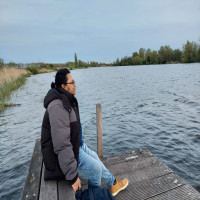
Md. Sazzadul Alam Associate Professor, Department of Anthropology
PROFILE
SHORT BIOGRAPHY
Sazzadul Alam is an Associate Professor in Department of Anthropology at Jahangirnagar University, Savar, Dhaka. He has firsthand knowledge about qualitative, quantitative and mix methods research. He has an immense experience of social research in various theme like Fishing community, Senior citizen, violence against women, telemedicine service, microfinance programme, brothel living children, poverty and food Insecurity, primary health care, health equity, MNCH etc with different research organization like JPGSPH (James P Grant School of Public Health), icddr,b, BRAC, a2i ( Access to Information), dRi (Development Research Initiatives) etc.
RESEARCH INTEREST
Development, Migration, Tourism, Indigenous rights, Elderly people, Ethnicity, and conflict.
JOURNAL PAPER
Md Sazzadul Alam, Farmer's Market: Alternative Marketing System against Capitalism, AN EXERCISE IN WORLD MAKING, pp.66-71, ISS, The Hague, Netherlands, 2024.This paper argues that an alternative market run by farming communities—such as the farmer’s market in Bangladesh—can be more consumer-friendly and sustainable than the conventional capitalist market. To support this argument, the paper examines how the capitalist market system in Bangladesh often excludes both producers and consumers from meaningful participation, prioritizing profit over community engagement. In contrast, small-scale farmer's markets challenge the traditional market syndicates that typically control pricing. These markets foster direct relationships between farmers and consumers. Through a communal approach, farmers collectively determine product prices and grow fresh vegetables specifically for their consumer communities.
Sazzadul Alam, Noor Kutubul Alam Siddique, and Rasheda Akhtar, Social Interaction between 'Host' and 'Guest': Rohingya Refugee Context in Bangladesh, Asian Journal of Social Sciences and Legal Studies, 4, 3, pp.85-93, 2022. doi: https://doi.org/10.34104/ajssls.022.085093ABSTRACT
The juxtaposition of Rohingya refugees and the host community will be explored in this article, where two parties are not only in a hostile situation but also create an amicable situation through their social interactions. This relationship will be examined using the theoretical concepts of conflict and cultural assimilation. Though the two groups did not originate from the same place, they today have a common socio-cultural heritage. That is why, to function in society, the host community and Rohingya refugees are involved in new social interactions over time and in flourishing mixed kinds of kin networks like marriage and patron-client relations. It is noted that the host community is becoming hostile, but at the beginning of the influx, they were not unsympathetic. Both groups (Rohingya refugees and host community) also have social communication with working aid agencies. On the other hand, through capitalizing on the current situation, a new economic class has emerged in the host community. It is also significant to recognize the ongoing social pattern. So, to understand the relationship profoundly between the host community and Rohingya refugees, those kinds of social interactions should count in similar social research.
Abstract: The children living in brothels are susceptible to a range of risks. Some risks are from the physical location of the brothels; some are constructed/caused by children themselves, their mothers and the brothels, and; some are risks constructed/caused by the outside community, broader society, outside institutions like police, political leaders, and the government. In this situation, childhood in the brothel is not adorable rather it is more despicable for the brothel children. They have to face multiple heinous circumstances like accommodation hazard, drug addiction and business, psychological depression, child marriage or weapon of local politics in their juvenescence period which is socially constructed. This process make them untouchable for the mainstream society as well as hindering for their own future life.
Keywords: Childhood, Brothel, Children, Encounter, Life experiences
Sazzadul Alam, Md. Mossabber Hossain, Ridwan Mostofa Shihab & Tania Saha, Tourism and Pandemic: Understanding Livelihood Negotiation Process of Tourism-Dependent Communities, The Jahangirnagar Review, Part II: Social Sciences, 46, 2, pp.111-122, 2022.The recent pandemic (Covid-19 virus) has had a highly devastating consequence on tourism, nipping tourism-related professions around the world into laying off employees and predicting as many as 50 million jobs lost in the tourism sector. But the pandemic confined their subsistence through different rules and regulations. So this article will critically argue that within the same geographical area, the livelihood negotiation process is not the same for all, as well as livelihood negotiation activities do not depend on individual choice; rather, they depend on the available options of activities in that particular area or culture. As this was qualitative research and for field data collection as well, this research adopted diverse qualitative data collection tools named Focus Group Discussion (FGD), In-depth Interview (IDI), and Case Study. This research has chosen Sadar Upazila of the Rangamati District (Chittagong Division) as the data collection field. During the COVID-19 pandemic, the Rangamati district, like all tourist destinations, saw a drop in visitors. As a result, those whose livelihoods rely on tourism, as well as tourist movement, face economic, social, and business capital challenges. People in that area had to negotiate with their means by changing professions, accepting help from kin and using savings to save the family, switching natural professions such as retailers to wholesalers, arranging loans to keep a job, and turning side jobs into the main source of income, and breaking state rules to keep a job. Current research concluded with the argument that living and depending on the same ground, hill people's lives and livelihood negotiation processes are distinctively different from each other.
Keywords: Tourism, Pandemic, Negotiation, Tourism-dependent community, Livelihood
Md Sazzzadul Alam, Mossabber Hossian, ‘আদিবাসী’ বিষয়ক বিতর্ক: স্থানীয় পাহাড়ি বাঙালি বনাম বাঙালি ভিন্ন অপর জাতিগোষ্ঠীর বয়ান, সমাজবিজ্ঞান সমীক্ষা, 5, pp.1-11, 2021.
এই প্রবন্ধে মূলত বাংলাদেশের সংবিধানের পঞ্চদশ সংশোধনীর বিষয়ে পার্বত্য অঞ্চলে বসবাসরত স্থানীয় বাঙালি ও বাঙালি ভিন্ন অপর জাতিসত্তার মানুষের নিজস্ব ভাবনা চিন্তাকে তুলে ধরা হয়েছে। পঞ্চদশ সংশোধনীতে মূলত বলা হয়, সমতল ও পাহাড়ের বাঙালি ভিন্ন অপর জাতিসত্তার মানুষের পরিচিতি হবে ‘ক্ষুদ্র নৃতাত্তি¡ক জাতিগোষ্ঠী’; তারা আদিবাসী বলে বিবেচিত হবে না। এই প্রসঙ্গ ধরে বাংলাদেশের সুশীল সমাজ থেকে শুরু করে সকল স্তরের মানুষ ‘বাঙালি’ বনাম ‘আদিবাসী’ বিতর্কে জড়িয়ে পড়ে যা বিভিন্ন গণমাধ্যম, বিদ্যায়তনিক পরিসর, পাবলিক ফোরামে আলোচিত হয়। কিন্তু এই বিষয়ে সমতল ও পাহাড়ের বাঙালি ভিন্ন অপর জাতিসত্তার মানুষের নিজস্ব পরিচিতি বিষয়ক কোন মতামত পাবলিক পরিসরে তেমনভাবে পরিলক্ষিত হয়নি। তাই এই প্রবন্ধে পার্বত্য অঞ্চলে বসবাসরত স্থানীয় বাঙালি ও বাঙালি ভিন্ন অপর জাতিসত্তার মানুষ সরকার প্রবর্তিত পরিচিতিকে কিভাবে গ্রহণ করছে সে বিষয়ে আলোকপাত করা হয়েছে; যেখানে দেখা যায় যে, স্থানীয় বাঙালিরা রাষ্ট্র কর্তৃক প্রদত্ত পরিচিতিকে যথাযত মনে করছে অন্যদিকে বাঙালি ভিন্ন অপর জাতিসত্তার মানুষ নিজেদের অধিকার রক্ষার্থে ‘আদিবাসী’ পরিচয়ে পরিচিত হতে আগ্রহী।
Mossabber Hossain and Sazzadul Alam, Online Fertilizer Recommendation System (OFRS) in Bangladesh: Perspectives from the Field, The Jahangirnagar Review: Part II: Social Sciences, XLIV, pp.347-358, 2020, Printed in June 2021.Bangladesh is well-known for its agrarian social structure; it faces enormous challenges as the quality of land is deteriorating due to the degradation of soil fertility (e.g. nutrient imbalance).Intensive land use for high yielding crop farming without appropriate soil management has caused depletion of soil fertility in Bangladesh. For maintaining soil quality, it is required to follow fertilizers recommendation which is possible by knowing actual situation of soil physical condition through soil testing. Soil test and subsequent fertilizer recommendation were pioneered and provided to farmers via online by SRDI under a2i service innovation fund1. This article critically reviews the impact, effectiveness, and challenges of digital fertilizer recommendation system from rural farmers perspective.
মোঃ সাজ্জাদুল আলম, শরণার্থী সংকটঃ স্থানীয় জনগোষ্ঠীর নিত্য অভিজ্ঞতা ও অভ্যস্থতার নৃবৈজ্ঞানিক পাঠ, 2020.সারসংক্ষেপঃ রোহিঙ্গা সমস্যা বর্তমানে বাংলাদেশের বৃহৎ রাষ্ট্রীয় কাঠামো থেকে শুরু করে সামাজিক-সাংস্কৃতিক প্রতিটি পরিসরে আলোচিত বিষয়। আর এই সমস্যার সমাধানের আলোচনা আন্তঃরাষ্ট্রীয় কাঠামো ছাড়িয়ে বিশ^ পরিমন্ডলে বিস্তৃত। তবে এই সমস্যার সম্মুখভাগে স্থানীয় অধিবাসীরা অবস্থান করছে। কারণ কোন প্রকার পূর্বপ্রস্তুতি ছাড়াই স্থানীয় অধিবাসীদের একটা বিরাট জনগোষ্ঠীর (রোহিঙ্গা) সামাজিক, সাংস্কৃতিক, অর্থনৈতিক ও পরিবেশগত চাপ সামলাতে হচ্ছে। যার ফলে তাদের প্রাত্যহিক জীবনে নতুন অভিজ্ঞতার মুখোমুখী হতে হচ্ছে। আবার নতুন অভিজ্ঞতাকে সামাল দিতে ও মানিয়ে নিতে নতুন সামাজিক-সাংস্কৃতিক, অর্থনৈতিক কৌশলের ব্যবহারও লক্ষ্য করা যাচ্ছে। আর রোহিঙ্গা সমস্যা বোঝার প্রয়াসে স্থানীয় অধিবাসীদের মধ্যকার এই চলমান দ্বিধা ও সংকটগুলোকে আমলে নেয়া বেশ জরুরি।
Dr. Rasheda Akhtar, Md Sazzadul Alam, Noor Kutubul Alam Siddiquee, Education for Visually Impaired: Congeniality Study of Digital Talking Book, The Jahangirnagar Review, XLII, pp.327-336, 2020.Abstract: Globally, Information Technology is being leveraged to empower people
and improve the quality of life of the citizens regardless of their age, sex, race, social
status and physical ability. The innovation of Digital Taking Book (DTB) is the contribution of that Information Technology. Digital Talking Book brings a significant advancement in favour of people who are blind or have a print disability like reduce dependency on Braille books, save time and energy, increase interest for going to school, boost up their confident etc.
Key words: Digital Taking Book, visually impaired, technology
ABSTRACT
Background: Despite enormous efforts, healthcare service is still a daunting challenge area of Bangladesh healthcare systems. Bangladesh suffers from both a shortage of and geographic mal-distribution of human resource for health, as well as inadequate resources. Considering the challenges, telemedicine can be a blessing especially to the people living in hard-to-reach and rural areas. The current study was conducted on to measure the outcomes of providing telemedicine service at the field level.
Methods: The study was conducted in Nagarkanda Upazilla of Faridpur district. Mixed method approaches including user experience and perception survey, case study and in-depth interview were adopted in order to bring a comprehensive scenario.
Results: Around 50% of the users used to visit telemedicine center frequently. For quality of service provided from telemedicine service point, there were few benchmarks like service provider’s behavior, waiting time, accessibility, distance, cost of treatment, willingness to pay and referral mechanism. Telemedicine service centers were found situated within the reach of people (within 1-2 km of 83.30% km). 97% participants rated service provider’s behavior as good. Cost of treatment including diagnosis, prescription and medication was found within 501-3000 BDT for 60% of participants.
Conclusions: Although the studied telemedicine service was not comprehensive in nature, it still helped to save time, reduce cost and most of all increased access to healthcare services.
Keywords: Telemedicine, Barriers, Service providers, Treatment cost, Service quality
Abstract: This article takes a critical look at the class based different vulnerabilities that confronted by elderly people in their everyday life and furthermore indicate class based knowledge about existing law and policy with respect to elderly people in Bangladesh. As elderly people belong in different class their experiences are also different. Because of social stratification elderly people observe their difficulties in different social lenses. So to accommodate and understand the vulnerabilities, laws and policies of elderly people we have to consider social class.
Key words: Elderly people, Vulnerability, Law, Policy, Class
তানিয়া সাহা, রাশেদা আখতার, সাজ্জাদুল আলম, Socio-cultural Construction of Female Dress and Its Interpretation (Bengali write-up), সমাজবিজ্ঞান সমীক্ষা, 3,এই প্রবন্ধে মূলত বাংলাদেশের প্রেক্ষিতে নারী পোশাকের সমাজ-সাংস্কৃতিক অর্থময়তাকে বোঝার চেষ্টা করা হয়েছে। নারীর প্রতি সমাজের সামাজিক দৃষ্টিভঙ্গি, নারীকে কেন্দ্র করে গড়ে ওঠা ভিন্ন ভিন্ন মতাদর্শ, এমনকি ক্ষমতা ও নিয়ন্ত্রণের মত বিষয়গুলো নারী পোশাকের সঙ্গে অঙ্গাঅঙ্গিভাবে জড়িত। আর তাই নারী পোশাকই হয়ে ওঠে সমাজে নারীর ‘নারীত্ব’ নির্মাণের রূপকার। সেই কারণে সমাজ কর্তৃক নির্ধারিত পোশাক পরিধানের মাধ্যমে নারী তার নারীসুলভ বৈশিষ্ট্যকে ধারণ করেন এবং ‘প্রত্যাশিত নারী’ হয়ে উঠে। অন্যদিকে সমাজে নারীর প্রতি দৃষ্টিভঙ্গি ও নারীর অবস্থান সংক্রান্ত অর্থময়তা তার পরিহিত পোশাকেও প্রকাশিত হয়। আর এই পরিহিত পোশাক নারী তার স্বাধীন ইচ্ছায় নির্বাচন করতে পারেনা। আবার সময়ের পরিবর্তন, পরিবেশগত পরিবর্তন, মিডিয়া এবং ফ্যাশন হাউজের প্রভাবে নারীর পোশাক নির্বাচনজনিত ভাবনা ও দৃষ্টিভঙ্গির বদল হচ্ছে। মূলত মিডিয়ার বদৌলতে দৈনন্দিন জীবনে পোশাককে কেন্দ্র করে এই ফ্যাশন, ডিজাইন, স্মার্টনেস, সৌন্দর্য বিষয়ক বাড়তি সচেতনতা তৈরী হয়। আর একারণে নারী পোশাককে কেন্দ্র করে গড়ে উঠেছে বিশাল বাণিজ্যিক পরিসর যেখানে প্রধানতঃ নারীকে টার্গেট গ্রæপে পরিণত করতে দেখা যায়।
CONFERENCE PAPER
Md Sazzzadul Alam, Dr Rasheda Akhtar, Tania Saha, Mossabber Hossian, Life in ‘Between and betwixt’: Anthropological exploration of COVID-19, Pandemic Realities in South Asia: Identity, Exclusion and Everyday Experiences of Diversified Community, Tokyo University of Foreign Studies (TUFS), Japan,Md Sazzzadul Alam, Recent Changes in Village Society and Agrarian Structure (Ranjan SahaPartha, Dhaka: Shangbed, 2020) organized by 6th International Congress of Bengal Studies, India., 6TH INTERNATIONAL CONGRESS OF BENGAL STUDIES, Delhi University, Delhi,
Md Sazzzadul Alam, Discussions on Book Publication: Recent Changes in Village Society and agrarian Structure By Ranjan Saha Partha, 6TH INTERNATIONAL CONGRESS OF BENGAL STUDIES, Delhi University, Delhi, 2021.
When we think about village, we perceive a static image about village in our imagination. But in present time, village/rural society has become inextricably linked with the current trend of capitalist economy through globalization, migration, the advent of new technologies in agriculture, the consumer-building process of the contemporary market system or the combination of new agro-centric industrialized management. In this variability, the peasant society or agricultural structure has also become accustomed to itself. So it would be better to understand the peasant society or rural structure in no way between the former ‘city’ vs. ‘village’ dichotomy but to understand village, peasant, agricultural management by involving it in the new consumer culture or industrialized system in agriculture. And by doing so, anthropologists will be interested in reading the combination of ‘city’ and ‘village’ in a new way. Dr. Ranjan Saha Partha in his recently published book “Recent Changes in Village Society and Arrarian Structure” has provided food for new ideas about our rural society and agricultural structure.
Refugee quandary in Ukhiya: Anxiety, disjunction and negotiation of local community,EDITED BOOK
মোঃ সাজ্জাদুল আলম, ড. রাশেদা আখতার, মাধুরী গোস্বামী, পিটার বিশ্বজিত মন্ডল,রিদওয়ান মোস্তফা শিহাব, মোঃ শাহরিয়ার সাইফ, মংচোয়াং অভি, মহামারী ও ‘লিমিনাল’ পর্যায়ঃ দোদুল্যমানতা ও কৌশলী জীবনের নৃবৈজ্ঞানিক পাঠ, pp.138-154, 2021.Using the concept of ‘liminality’ by Victor Turner, this article will demonstrate that current pandemic situation is the transition phase of social changes and people are negotiating with these changes. This article largely focuses on the negotiations of the liminal stages during pandemic situation in Bangladesh through health sector, household stuff, religious activities, social relations and business process (online business). This study also gives an insight of how people are adapting in such between and betwixt situation by negotiating and taking numerous techniques to earn their livelihood. Multi-Sited Ethnography was chosen as the major approach of the study. In-depth Interviews along with informal interviews is steered via mobile devices to gather people's opinions, beliefs, experiences, and feelings. To conclude, the research stands between ‘normal’ and ‘neo-normal’ phase to understand the socio-economic imbalances and changes of the present state with the help of ‘liminality’.
Teaching
| Course Code | Course Title | Semester/Year |
|---|---|---|
| 406 | ENVIRONMENTAL ANTHROPOLOGY | 4th year |
| 503 | Childhood and Child Rights | Masters |
| 101 | Social and Cultural Anthropology | 1st year |
| 302 | Peasant Society and Culture | 3rd year |
| 207 | Bangladesh History, Society and Culture | 2nd year |
| 402 | Applied Anthropology | 4th year |
| 510 | Migration and Diaspora Studies | Masters |
Experience
Position: Lear Researcher
Period: 2025
Mid Term Evaluation of ‘Social Stability Between Rohingya Refugees and Neighbouring Communities in Ukhiya (Palongkhali Union Parishad) and Ramu (Khuniapalong and Dakhin Mitaichari Union Parishad) Sub-Districts, Cox's Bazar, Bangladesh’ Project
Position: ASPM-1
Period: 2025-present
Salty Waters, Silent Struggles: An Ethnographic Study of Sexual and Reproductive Health of Women in Coastal Bangladesh
Position: Consultant
Period: 2021
Women Empowerment & Leadership Development Activities of GNB Projects
Position: Consultant
Period: 2020
Baseline Survey for enhancing social protection for female tea garden workers and their families in Sylhet Division, Bangladesh
Position: Consultant
Period: 2019
Establishing Vulnerable Peoples’ Rights and Access to Social Safety Net Programmes (EVPRA) Project
Position: Researcher
Research Issue: Refugee Quandary in Ukhiya: Anxiety, Disjunction and Negotiation of Local Community
Working area:Ukhiya, Cox's Bazar
Position: Researcher
Research Issue: Violence against women context of ‘Eve-teasing’-An anthropological analysis
Working area: Dhaka city
Position: Researcher
Research Issue: An anthropological study of ‘MONGA’ and ‘Food security’ considering native point of view
Working area: Balashighat and Rasulpur, Ghaibandha
Position: Researcher
Research Issue: Exploring of socio-culture structure of Fishing community: Context of Madiashulia village
Working area: Madiashulia village, Kaliakur, Gazipur.
Position: Sr. Research Assistant
Research Issue: UNICEF Maternal, Newborn and Child Health Project
Summary of activities performed relevant to the assignment: Developing structured questioner, Qualitative data collection (use the methods of Observation, Shadowing, IDI, FGD, Social map), Data transcription and translation, Qualitative data analysis (data coding with Atlas-ti) and finally assist for report writing
Work Area: Mymensing, Thakurgaon, Gaibandha, Nilphamari, Jamalpur, Gopalgonj, Bandarban.
Position: Sr. Research Assistant
Research Issue: IDRC Governance for Health Equity Project: mobilizing demand for Primary Health Care among the Urban Poor in Bangladesh
Summary of activities performed relevant to the assignment: Developing structured questioner, Qualitative data collection (use the methods of Observation, IDI, FGD, Case study), Data transcription and translation, Qualitative data analysis (prepare code list, data coding with Atlas-ti, prepare data display table, summary writing, prepare power point presentation) and finally assist for report writing.
Working area: Dhaka, Tongi, Chittagong, Barisal.
Position: Field Research Officer
Research Issue: Effectiveness of micronutrient fortified rice on anaemia and empowerment of women under Government’s Vulnerable Group Development (VGD) safety net programme
Summary of activities performed relevant to the assignment: Field research Team leading, Field planning, Data collection, Data analyzing, Assist to report writing, supervise blood sampling collection team, maintain finance and human resource related activity of the project.
Working area: Gazipur (Sadar, Kaligonj Upazilla), Gopalgonj (Tungipara, Kashiani Upazilla), Khulna (Koyra, Dacope Upazilla), Bagerhat (Sharankhola, Morrelgonj Upazilla), Shatkhira (Shamnagar, Kaligonj Upazilla).
Position: Consultant
Research Issue: Analysis of Poverty and Food Insecurity Dynamics in Cox’s Bazar, Bangladesh and their Implications for Women & Adolescent Girls
Summary of activities performed relevant to the assignment: Field research Team leading, Field planning, Data collection, Data analyzing.
Working area: Ukhiya, Cox’s Bazar
Position: Consultant
Research Issue:Needs assessment of children living in and around Daulatdia and Faridpur brothels; Funded by Save the Children (Qualitative research)
Summary of activities performed relevant to the assignment: Data analyzing, Report writing
Working area: Douladia, Faridpur
Position: Consultant
Research Issue:Evaluation of financial education services By BRAC microfinance programme in Bangladesh (Qualitative research)
Summary of activities performed relevant to the assignment: Field research Team leading, Field planning, Data collection, Data analyzing, Report writing and deliver to dRi
Working area: Rangpur, Naogha, Pabna, Chawadanga, Tangail, Barisal, Patuakhali, Bhairab.
Position: Consultant
Research Issue:‘Elderly people’ in Bangladesh: Vulnerabilities, Laws and Policies (Qualitative research)
Summary of activities performed relevant to the assignment: Team leading, Proposal writing, Research designing, Field planning, Data collection, Data analyzing, Report writing and deliver to BRAC
Working area: Dhaka
Position: Consultant
Research Issue: “Impact study of Providing telemedicine service at the field level through locally developed modern medical equipment and software” And
“Impact study of Production of multi-media digital Talking Book”
Summary of activities performed relevant to the assignment: Proposal writing, Research designing, Field planning, Data analyzing, Report writing and deliver to a2i
Working area: Chittagong & Faridpur
Activity
Position: Assistant Professor
Contact
Md. Sazzadul Alam
Associate Professor
Department of Anthropology
Jahangirnagar University, Savar, Dhaka-1342, Bangladesh.
Cell Phone: +08801853163148
Work Phone: +08801853163148
Email: sazzadul@juniv.edu
, alam_sazzadul@yahoo.com